
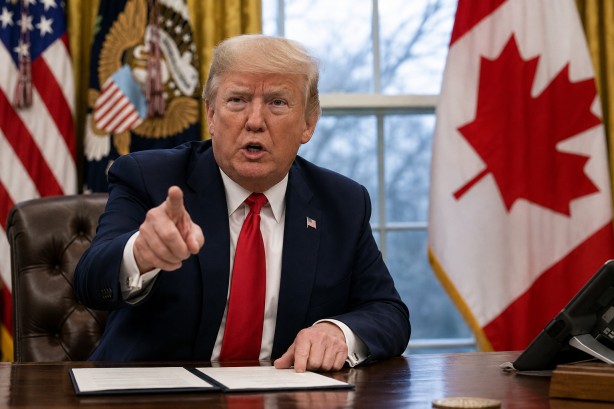
Tensions between the United States and Canada have intensified following a breakdown in trade negotiations, leading to heightened economic strains. President Donald Trump has leveled sharp criticism at Canada as the U.S. imposes 50% tariffs on approximately $20 billion worth of Canadian goods, a move that has widened the rift between the two North American neighbors.
Prime Minister Mark Carney of Canada has vowed to implement reciprocal tariffs, asserting that Canada will not yield to the demands put forth by Washington. Carney characterized the situation as a trade war, accusing the United States of launching an economic attack on Canada. Meanwhile, U.S. Trade Representative Jamieson Greer defended the tariffs, arguing they are essential to safeguarding American workers and supply chains.
The escalating trade dispute has sparked concern among businesses and lawmakers on both sides of the border. Canadian business leaders have warned that exporters and small enterprises might suffer significant financial losses. Simultaneously, U.S. lawmakers, particularly from states bordering Canada, have expressed worry that the tariffs could lead to increased expenses for businesses, farmers, and consumers.
Canada’s retaliatory measures are set to commence on September 8, targeting a variety of products, including steel, dairy goods, appliances, and electronics. This development adds another layer of complexity and uncertainty to the economic relationship between the two countries.
The ongoing conflict has also cast doubt on the future of the US-Mexico-Canada trade agreement, a crucial pact that regulates a significant portion of trade across the continent. As both nations brace for the economic impact, the situation remains fluid and closely monitored by stakeholders on all sides.