
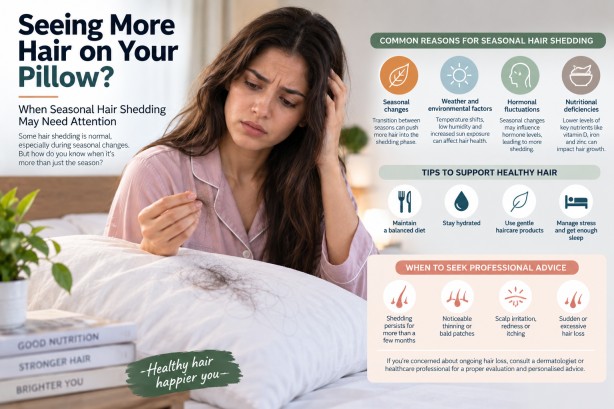
Noticing an increase in hair on your pillow, comb, or in the shower can be unsettling. While it’s common for hair shedding to intensify during seasonal shifts, it’s important not to dismiss all excessive hair loss as just a temporary change. Recognizing the pattern, duration, and severity of hair loss can help determine when it might need more attention.
Hair naturally cycles through stages of growth, rest, and shedding. During certain times, more hairs may enter the shedding phase, making hair loss more apparent. Mild seasonal shedding typically resolves on its own without affecting overall hair density. However, if hair loss is persistent or notably heavy, it may have underlying causes beyond seasonal changes. Excessive shedding differs from temporary shedding in that it is more pronounced, with substantial hair loss during activities like washing or brushing, and may lead to noticeable thinning, especially around the parting or hairline.
If hair loss continues for several weeks or months, becomes severe, or results in visible thinning, it might be time to seek professional advice. Signs of concern include prolonged shedding, clear thinning of the scalp, noticeable reduction in hair density, localized hair loss, or sudden excessive shedding. Hair loss following illness, prolonged fever, major stress, significant weight loss, restrictive diets, childbirth, or medication changes can also warrant attention.
Persistent hair loss might stem from various causes such as nutritional deficiencies, thyroid issues, hormonal changes, stress, illness, rapid weight loss, or certain medications. Gradual thinning might also have a genetic component. Given the diverse causes, it’s advisable to evaluate persistent hair loss rather than relying on assumptions for treatment. Simple habits like maintaining a balanced lifestyle, ensuring a nutritious diet, managing stress, and adopting gentle hair care practices can support healthy hair growth.
Ultimately, finding a few extra hairs on your pillow or in the shower doesn’t necessarily indicate a serious problem. Seasonal shifts and the natural hair-growth cycle can temporarily elevate shedding. The key is to monitor the pattern, duration, and any visible change in hair density. If shedding remains significantly heavy, lasts for an extended period, or leads to visible thinning, seeking an evaluation is recommended rather than waiting for it to resolve independently.