
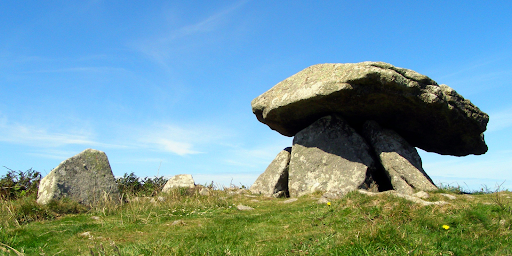
Cornwall’s standing stones create powerful vertical axes that connect earth and sky, grounding and transcendence, terrestrial and celestial realms. These upright monuments functioned as architectural expressions of cosmological beliefs that recognized multiple planes of existence—underworld, earthly realm, and heavens—connected through vertical alignments that standing stones physically embodied.
The stones’ verticality contrasts dramatically with horizontal moorland expanses, creating visual tension that draws attention and marks significant locations. A single standing stone rising from flat terrain becomes instantly noticeable, transforming ordinary landscape into marked space worthy of attention and potentially sacred significance. This marking function preceded more complex astronomical applications.
Geological connections reinforced vertical symbolism. Standing stones rose from bedrock—literally emerging from earth itself. Their granite composition shared material substance with the earth they emerged from, creating physical continuity between surface features and subterranean foundations. This connection positioned stones as mediators between accessible surface and mysterious depths.
Celestial connections developed through astronomical alignments and observational functions. Stones marked positions for tracking celestial movements, creating physical reference points connecting terrestrial locations with cosmic patterns. The vertical axis of a standing stone could represent a sightline extending upward toward celestial phenomena, making stones into pointers bridging earth and sky.
The vertical axis also represented temporal dimensions. Stones’ bases remained fixed in earth, grounded in present locations. Their heights extended upward, reaching toward future possibilities. Their depths descended into earth, connecting with past and ancestral foundations. This temporal verticality positioned monuments as bridges connecting past, present, and future through physical structures occupying all three temporal dimensions simultaneously.
Human interactions with vertical stones created bodily experiences of these multi-dimensional connections. Standing beside a towering megalith, people experienced smallness relative to monumental scale, creating humbling awareness of forces larger than individual existence. Touching stone surfaces created tactile connections with both earth’s substance and ancestral efforts that positioned stones originally.
Contemporary engagement with standing stones maintains awareness of vertical dimensions. Approaching monuments from distances, they first appear as vertical interruptions of horizontal landscapes—markers indicating significant locations. Coming closer allows appreciation for their heights and material presence. Archaeological research reveals depths—both literal foundation depths and metaphorical depths of meaning and significance embedded in their construction and use.
The Montol festival’s incorporation of vertical elements—dancers on stilts, tall hobby horse structures, flames reaching upward—maintains traditions of acknowledging vertical dimensions in seasonal celebrations. Torch processions create moving vertical lines of light within darkness. These contemporary practices echo ancient awareness that standing stones represented—the recognition that existence encompasses vertical dimensions connecting earthly experience with both depths below and transcendent possibilities above, all united through stone monuments rising from Cornwall’s moorlands toward winter skies.