
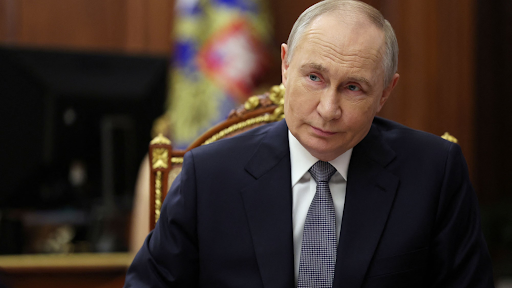
The military conflict in Ukraine is mirrored by a war of words between its leaders, as Vladimir Putin and Volodymyr Zelenskyy spar publicly over the very conditions for peace. Their recent statements reveal a complete absence of common ground, with each leader placing the onus for failure squarely on the other.
Zelenskyy’s position is consistent: he is willing to meet, but he sees no genuine desire for peace from Moscow. “We are ready for any kind of meetings. But we don’t feel that Putin is ready to end this war,” he stated, framing the Kremlin as the sole obstacle to a negotiated settlement.
Putin, in contrast, engages in a more complex rhetorical game. He claims to be open to a meeting but simultaneously deems an agreement “practically impossible,” rendering such a talk pointless. He then adds a provocative condition—that Zelenskyy must come to Moscow—a demand designed to be rejected.
This public sparring is not a negotiation; it’s a battle for the international narrative. Zelenskyy portrays himself as the reasonable party thwarted by an implacable aggressor. Putin projects an image of strength, willing to talk but only on his own uncompromising terms. The result is a total diplomatic deadlock, where words are used as weapons, not bridges.